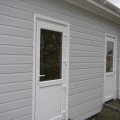
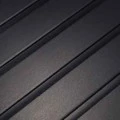
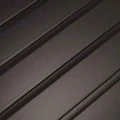
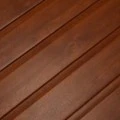
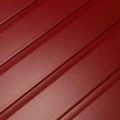
Embossed or Foiled External Systems
Why clad your house? Cladding can solve practical issues with the structure of a home or a commercial building. It can cover and decorate old walls or cure problems such as dampness or overheating in summer by reflecting heat with a light colour or combining cladding and insulation.
When installed with a breathable membrane cladding, it can prevent rainwater ingress or reduce or cure problems caused by dampness caused by cold materials in the house's structure, making contact with warmer areas.
Boards can be installed externally or internally. PVC is not a structural part of the building, but can be used to protect the structure. Adding panels or completely covering the whole structure can have a significant effect. The use of PVC reduces the need for maintenance, painting, staining, and wood preservatives. Colours hold fast for many years on most systems available, but the foiled products are likely to give the longest life spans.
It is attractive, Easy to clean, Easy To Install, and lasts for years.
Cladding Styles - Specifications
Planks vary from 100mm to 333mm, with 150mm being the most popular size. Nearly all the systems are 16mm thick when installed, and they come with corner joiners and edge trims specifically designed to accommodate the cladding at 16 mm. The cladding sizes quoted here are all the actual coverage sizes, so the exact size of the boards will be more significant in accounting for the overlap.
Cladding Fire Rating
There are different types of PVC available, each with its unique qualities. Solid PVC has a Class 1Y fire rating. Flames do not tend to spread when the PRODUCT is exposed to fire, and they will tend to charge and drop off. Some thought should be given to the materials behind these, which must also be fire-protected by sprayed, painted or covered to benefit from the low flame spread. If the product is not installed on solid walls or meets cavities, fire breaks should be used to comply with current building regulations.
Some properties would also be unable to use these systems within 1m of a boundary, which is sometimes found during roof loft conversions on dormers less than 1m from a neighbour. If your project is a new build or a renovation, it's a good idea to talk with your building inspector if you have any doubts. Where possible, the total fire ratings have been added to the relevant product pages.
These products have been used on domestic properties for over 30 years and have undergone reasonable testing in situ. The colour used does not affect the fire rating; they are all classed similarly. BBA BSI certificates vary by product, so you can find more information, if available, on the product information pages. Regulations are constantly changing, varying in Northern Ireland, Scotland, Wales, and England. Different types of buildings, i.e. taller buildings, will have different requirements.
Solid systems are suitable for most homes and can be used as soffits to match. Some systems can be easily two-toned if required.
PVC Cladding Installation
Installation is relatively quick and easy once the building's structure has been prepared. We recommend using a breathable membrane behind the cladding to catch any stray rain caused by wind pressure while still allowing the timber support structure to breathe and moisture to escape.
Consideration must be made for expansion, especially on the south-facing walls of the property. Special attention must be given to maintaining airflow behind the boards to prevent excessive expansion of darker-coloured boards. Boards should be cut short inside the trims to allow for expansion.
Cladding Colours
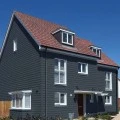
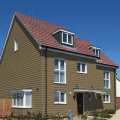
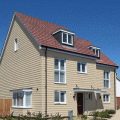
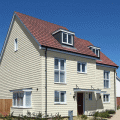
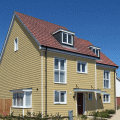
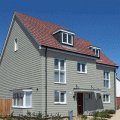
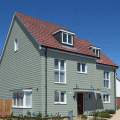
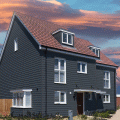
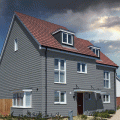
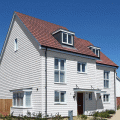
As a decorative product, these now come in many colours, which can be used to highlight areas of the building as design features. Colours can be plain or with foiled products; the PVC system can also be used to look like oak, white, and black ash or mahogany. Colour Options.
Cladding Texture
Now available in everything from a plain gloss finish to wood-effect embossed finishes with grained wood-effect textured finishes, new additions include a matte finish closer to the standard powder-coated aluminium products.
You can choose between designs in different sizes and colours. Solid is the economical choice, but if installed well and looked after, it should last for years.
Solid will take the knocks, looks shiny once installed, and is reasonably challenging. It is recommended if you have children in the area. Standard colours include white, cream, oak, mahogany, rosewood, and anthracite grey; some have an embossed finish. Kavex cladding is also in stock.
Manufacturers' Guarantees vary and come with different conditions. Some installers quote for cladding with a hollow system. Please note that some of these hollow systems are unsuitable for wall cladding. Most installers only use solid cladding material. To avoid problems, always follow the manufacturer's installation guides.
What's Your Cladding Colour Choice? Follow The Links Below